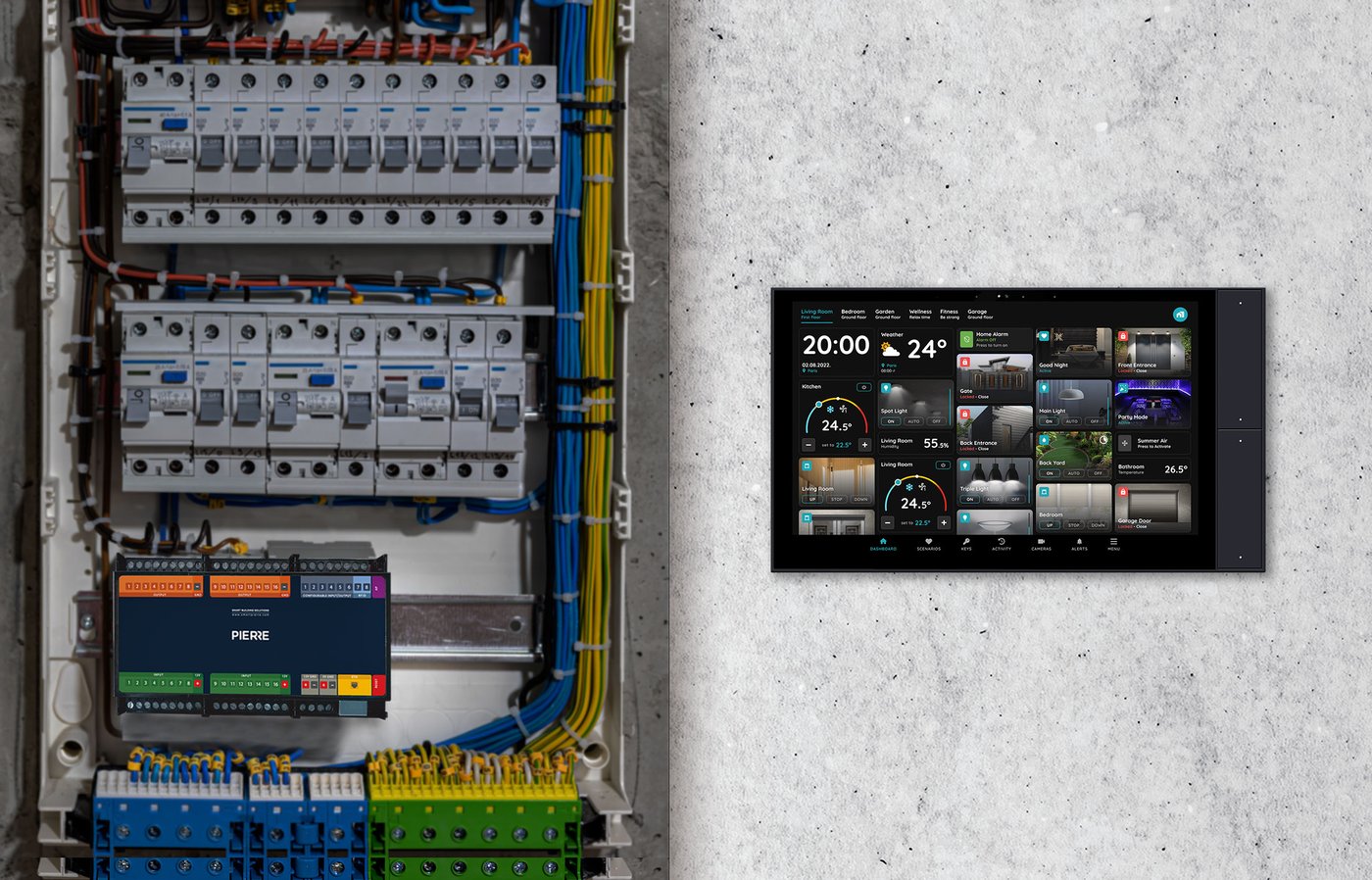
Fundamentals - PIERRE Hybrid System (Wired + Wireless Installation)
Description
The PIERRE Hybrid system combines the wired PIERRE Pro and wireless PIERRE Wave systems within a single installation.
Both technologies operate as part of the same PIERRE system, allowing wired and wireless devices to be controlled through the same interfaces and used together in Scenes and Automations.
This makes it possible to use the wired PIERRE Pro solution where the required cabling is available and extend the system with PIERRE Wave devices in areas where cabling is not available or would be difficult to install.
System Architecture
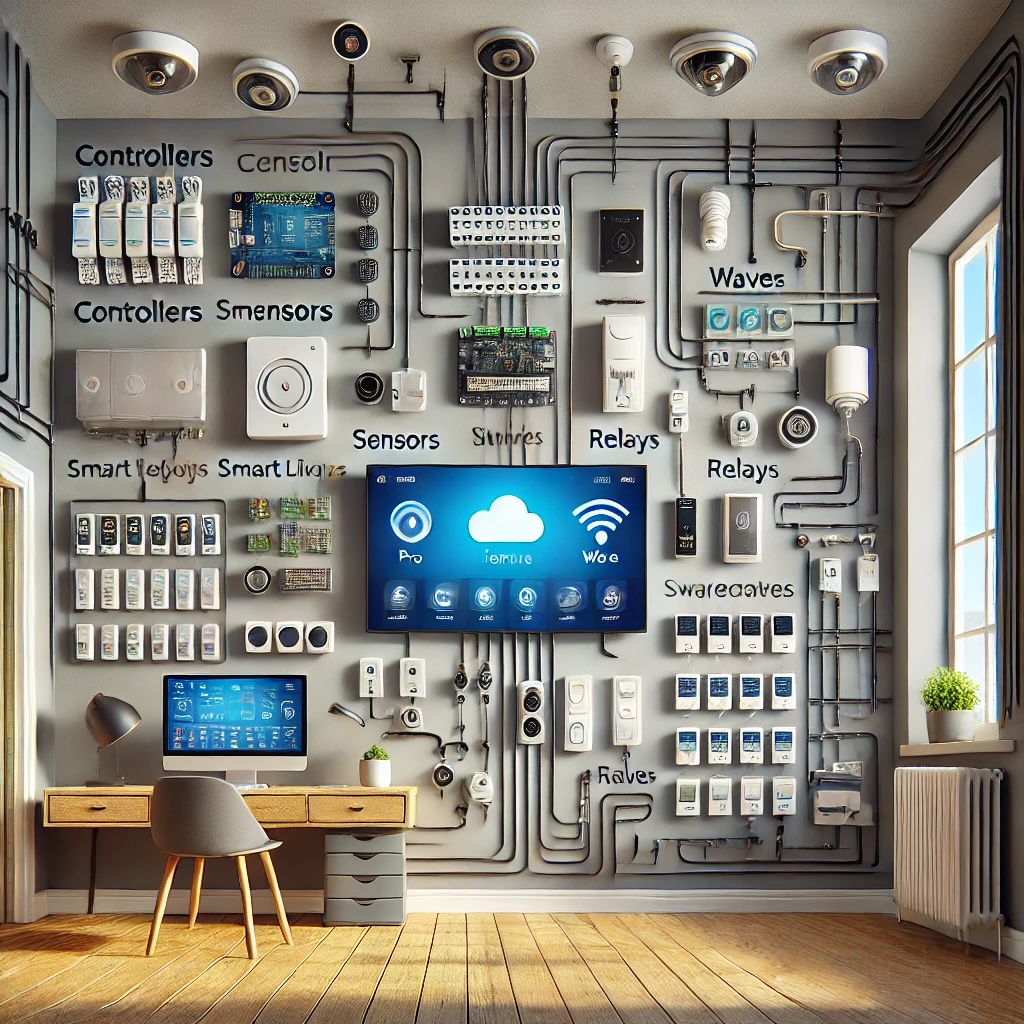
The Hybrid system combines both PIERRE infrastructures:
- PIERRE Pro – for connecting and controlling wired devices.
- PIERRE Wave – for connecting and communicating with wireless devices.
- PIERRE Displays and applications – for managing and controlling the system.
Unified User Experience
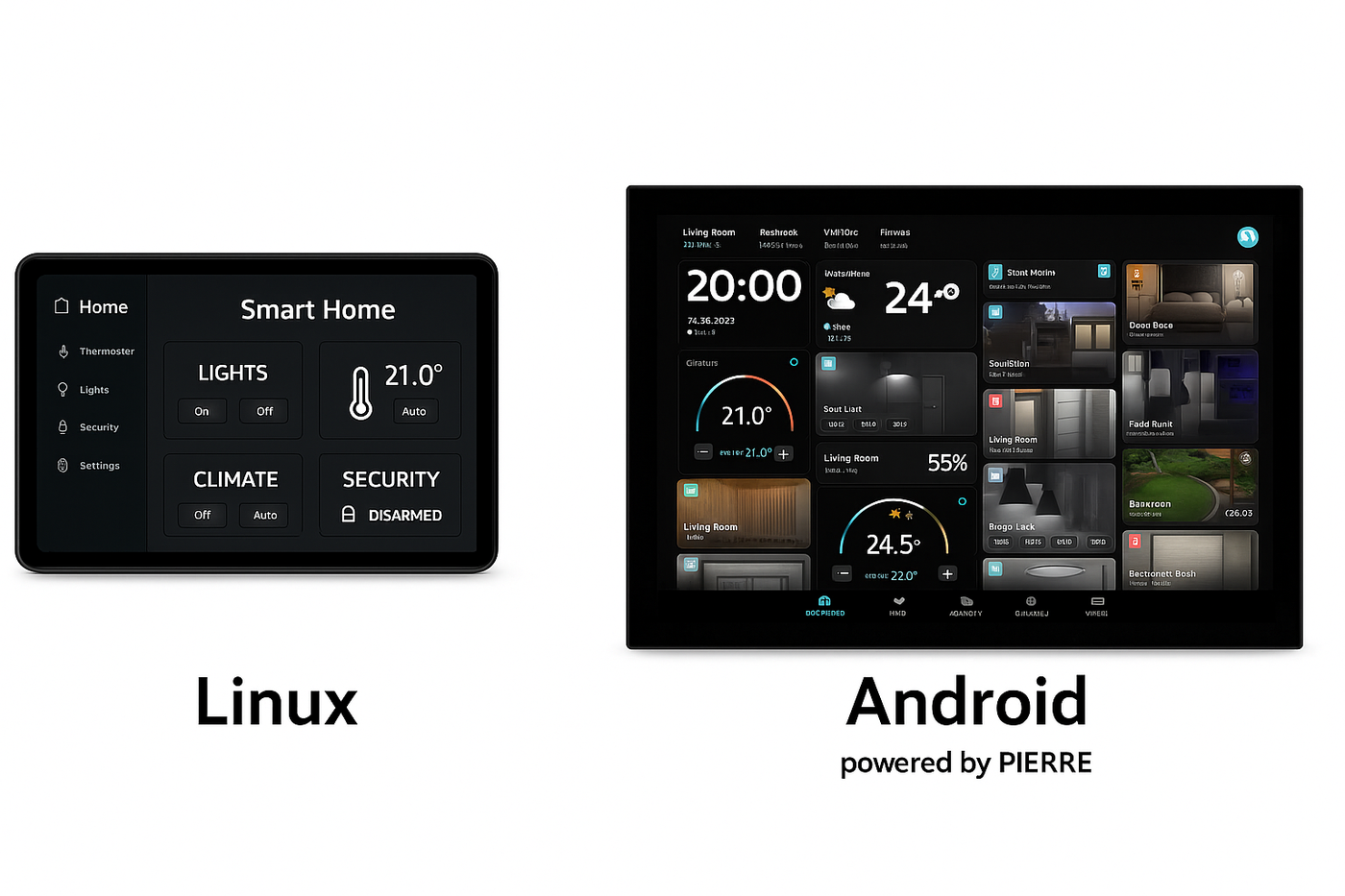
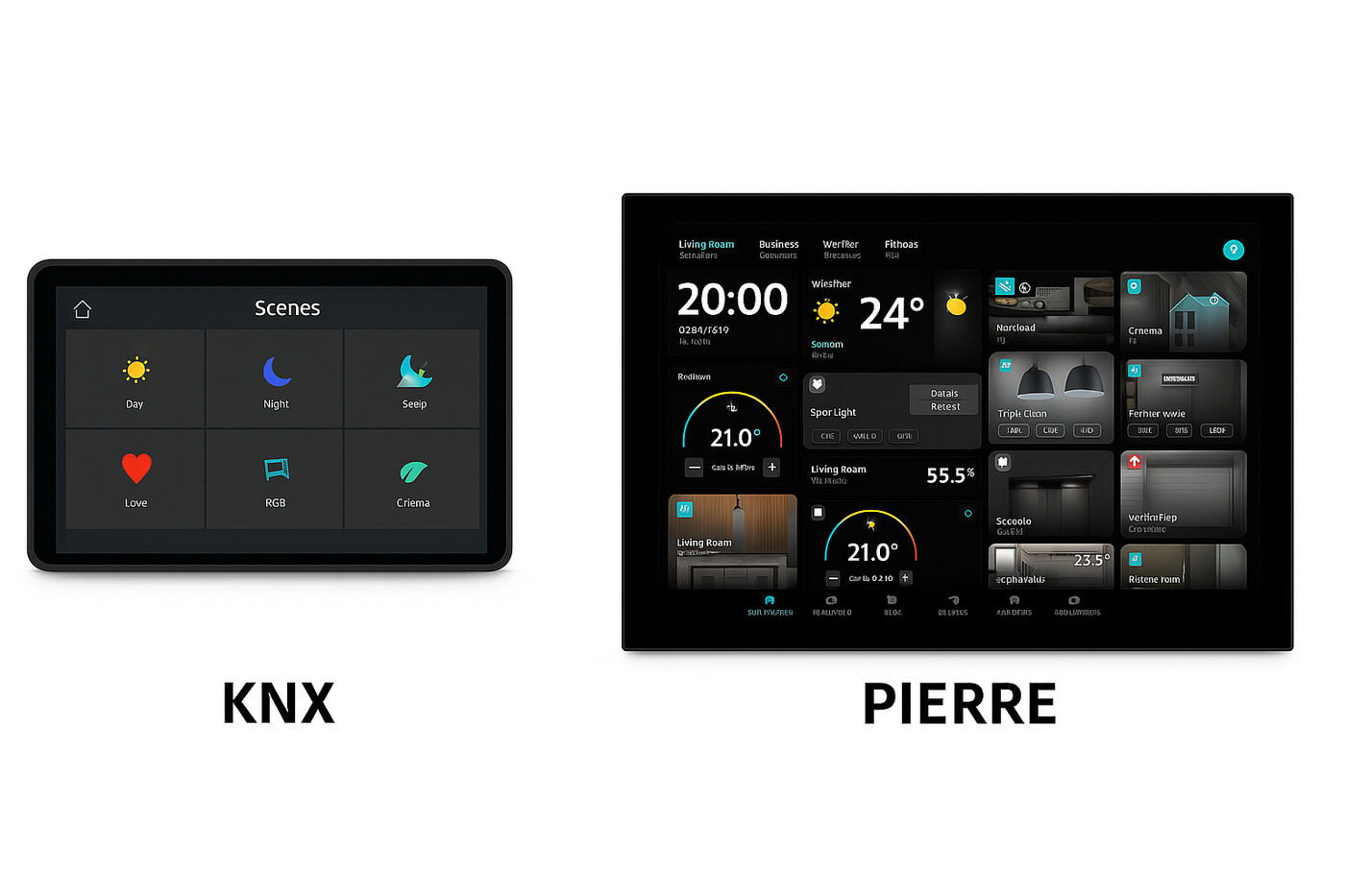
In the PIERRE system, wired and wireless devices can be displayed and controlled through the same user interfaces.
Devices can be accessed, for example, through:
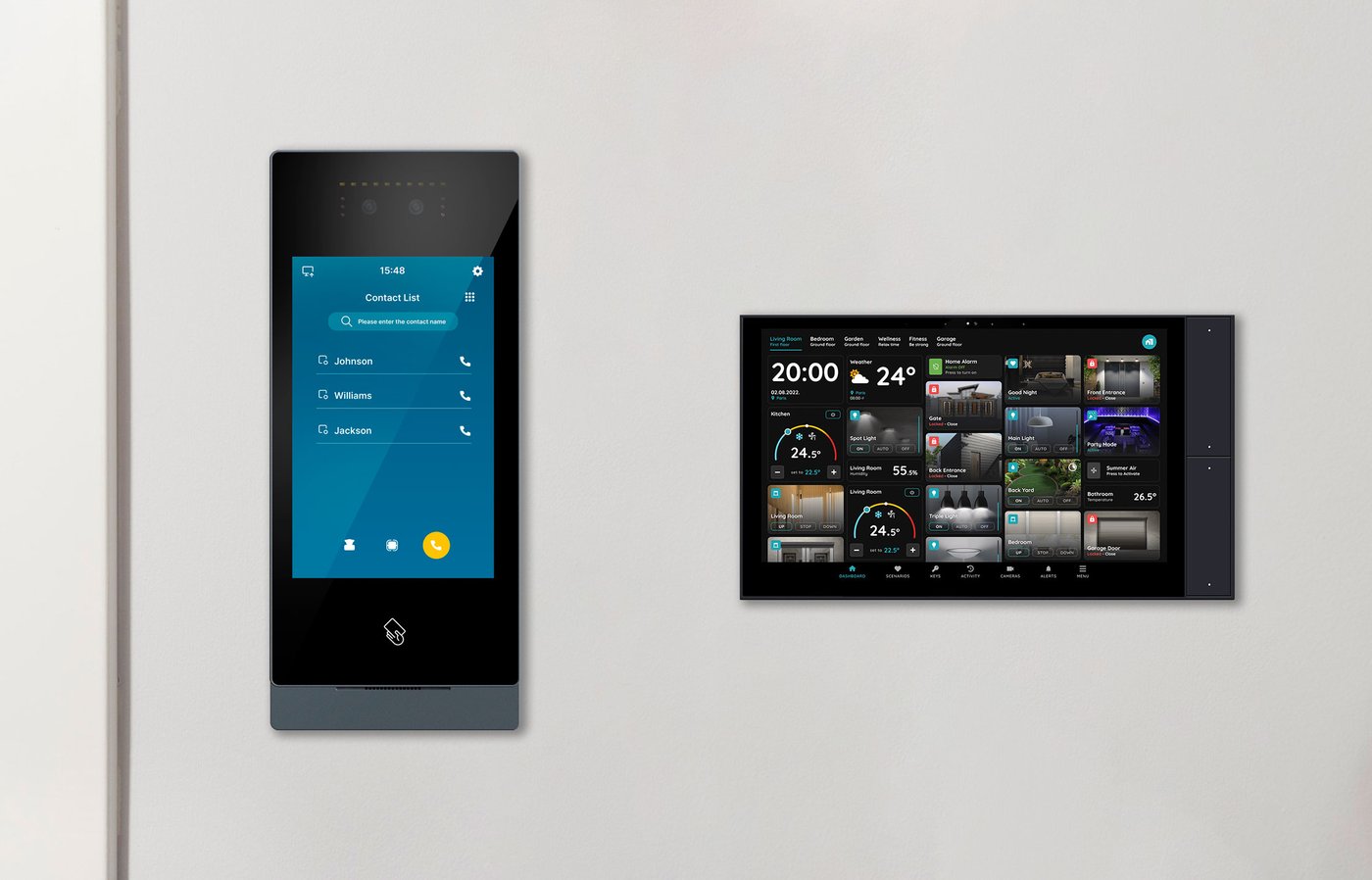
- PIERRE Displays,
- the Smart PIERRE Application,
- Dashboards,
- Scenes,
- Automations.
During everyday use, the end user does not need to know whether a particular function is provided by a wired PIERRE Pro device or a wireless PIERRE Wave device.
Using Pro and Wave Devices Together
PIERRE Pro and PIERRE Wave devices can be combined within the same PIERRE system and used together as part of Automations.
For example:
- a wired push button can control a wireless lighting function,
- a wired motion sensor can activate a Wave device,
- a wireless door/window sensor can trigger an action on a wired output,
- wired and wireless devices can be part of the same Automation.
The availability of each function always depends on the devices used and the configuration of the PIERRE system.
Automations and Scenes
An Automation or Scene can include both wired and wireless devices.
For example, a Leaving Home Scene can perform several actions at once:
- switch off wired lighting circuits,
- switch off Wave lighting,
- control shading devices,
- control compatible door or gate functions,
- trigger additional configured PIERRE actions.
This allows Pro and Wave devices to operate as part of one unified system from the user's perspective.
Where Is a Hybrid System Recommended?
A Hybrid system is particularly useful in projects where one part of the building can be wired, while installing additional cabling in other areas is not possible or practical.
Typical examples include:
- adding automation to existing buildings,
- properties with newly added building sections,
- extending already completed buildings,
- adding automation to locations where the required cabling was not originally installed,
- extending an existing PIERRE Pro system with PIERRE Wave devices,
- apartment buildings where a basic PIERRE Pro system is already installed, but additional functions need to be added to individual apartments or rooms.
Technical Notes
- In a Hybrid system, both the PIERRE Pro and PIERRE Wave infrastructures must be properly planned.
- Wired devices are connected through the PIERRE Pro Controller, while Wave devices communicate through the appropriate PIERRE Wave Gateway infrastructure.
- Reliable Zigbee mesh coverage must be provided for proper operation of Wave devices.
- Continuously powered Wave Router Devices that support routing can forward Zigbee communication, while battery-powered End Devices do not operate as Routers.
- When designing a Hybrid system, consider whether a wired or wireless solution is more appropriate for each function.
- When using I/O Sync, the system's Bridge structure and I/O assignments must be taken into account. I/O Sync can only be used between compatible and properly configured I/Os within the corresponding Bridge.