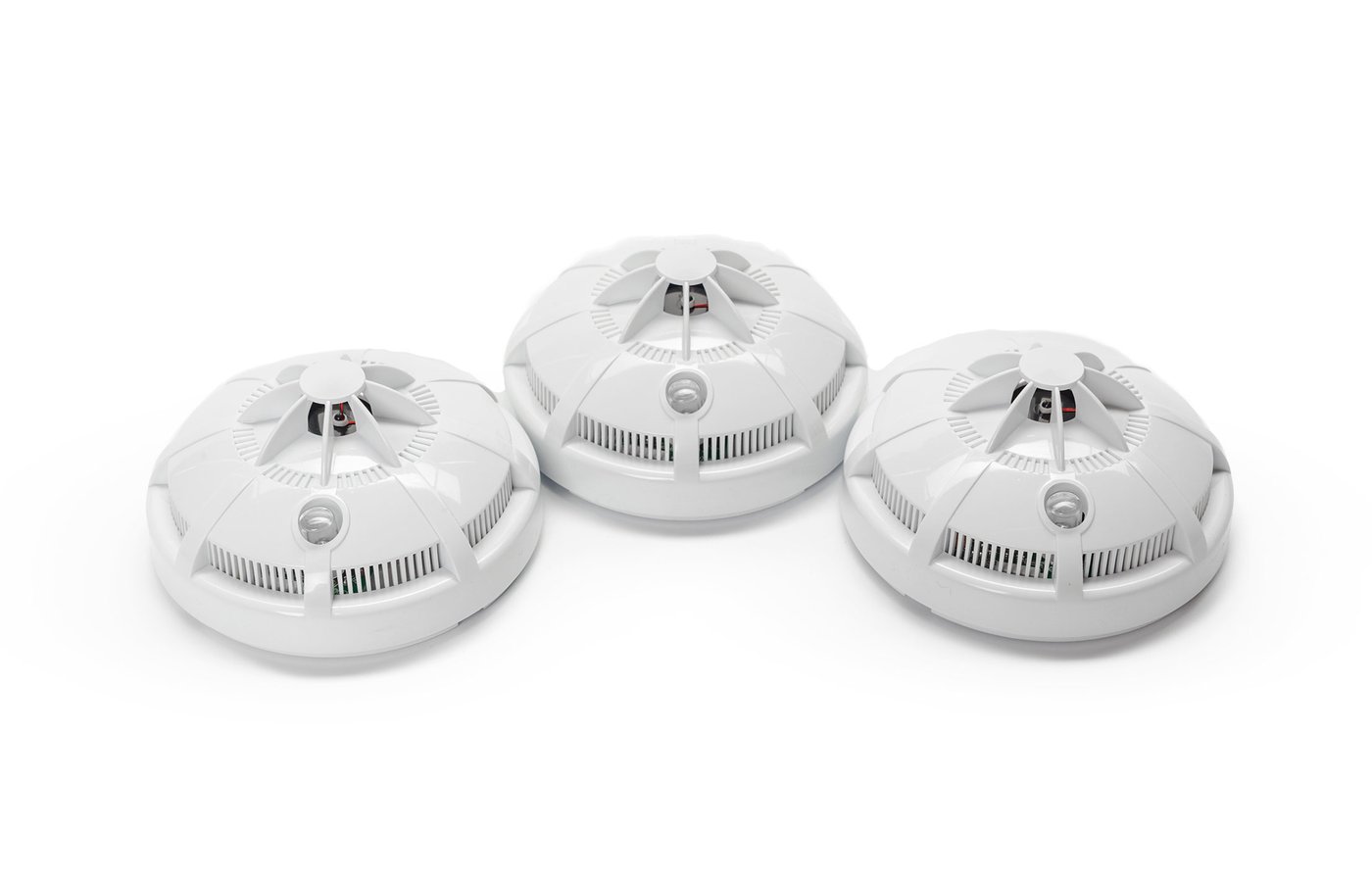
Solution - CO and other Gas Sensors
Description
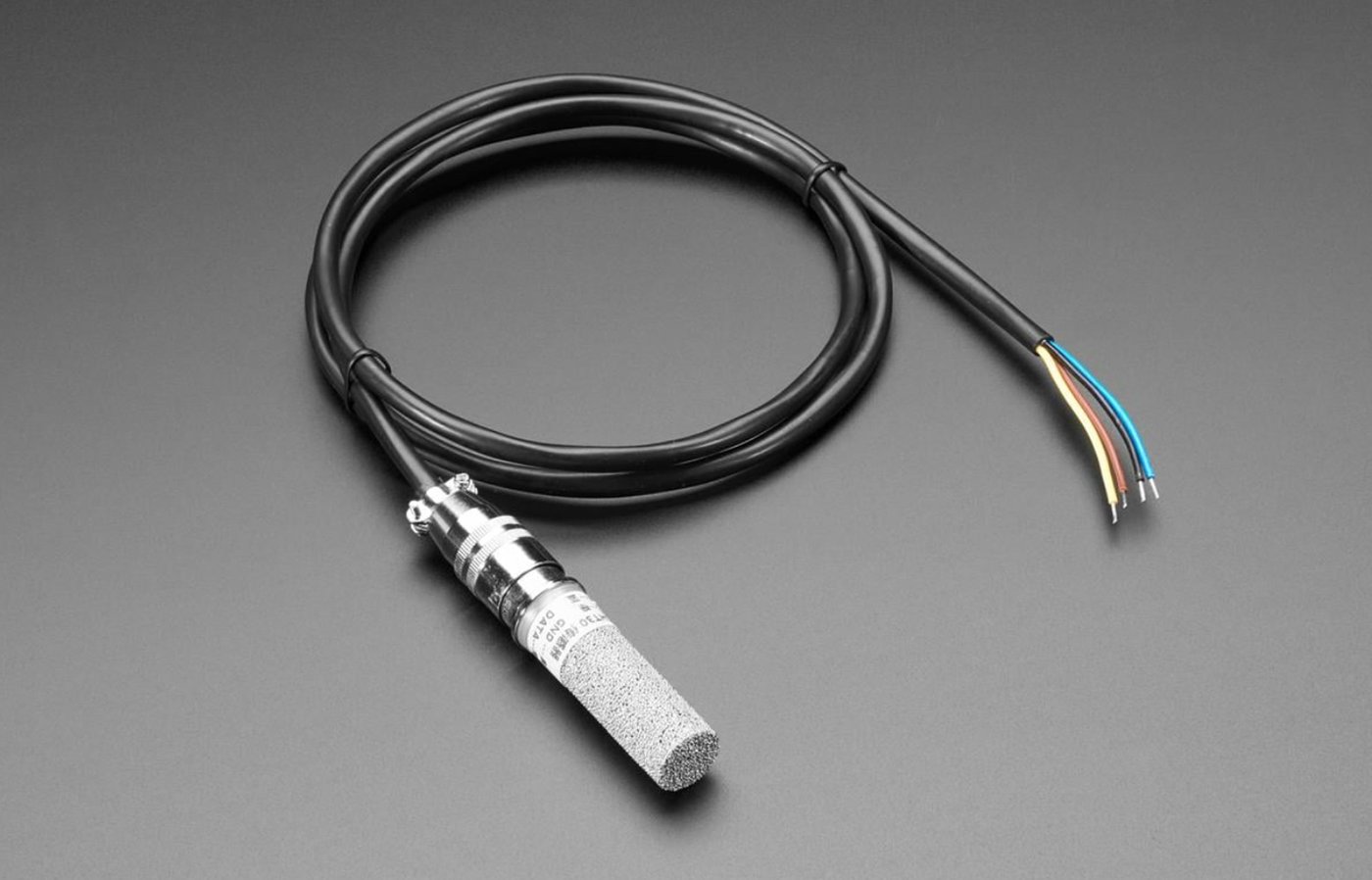
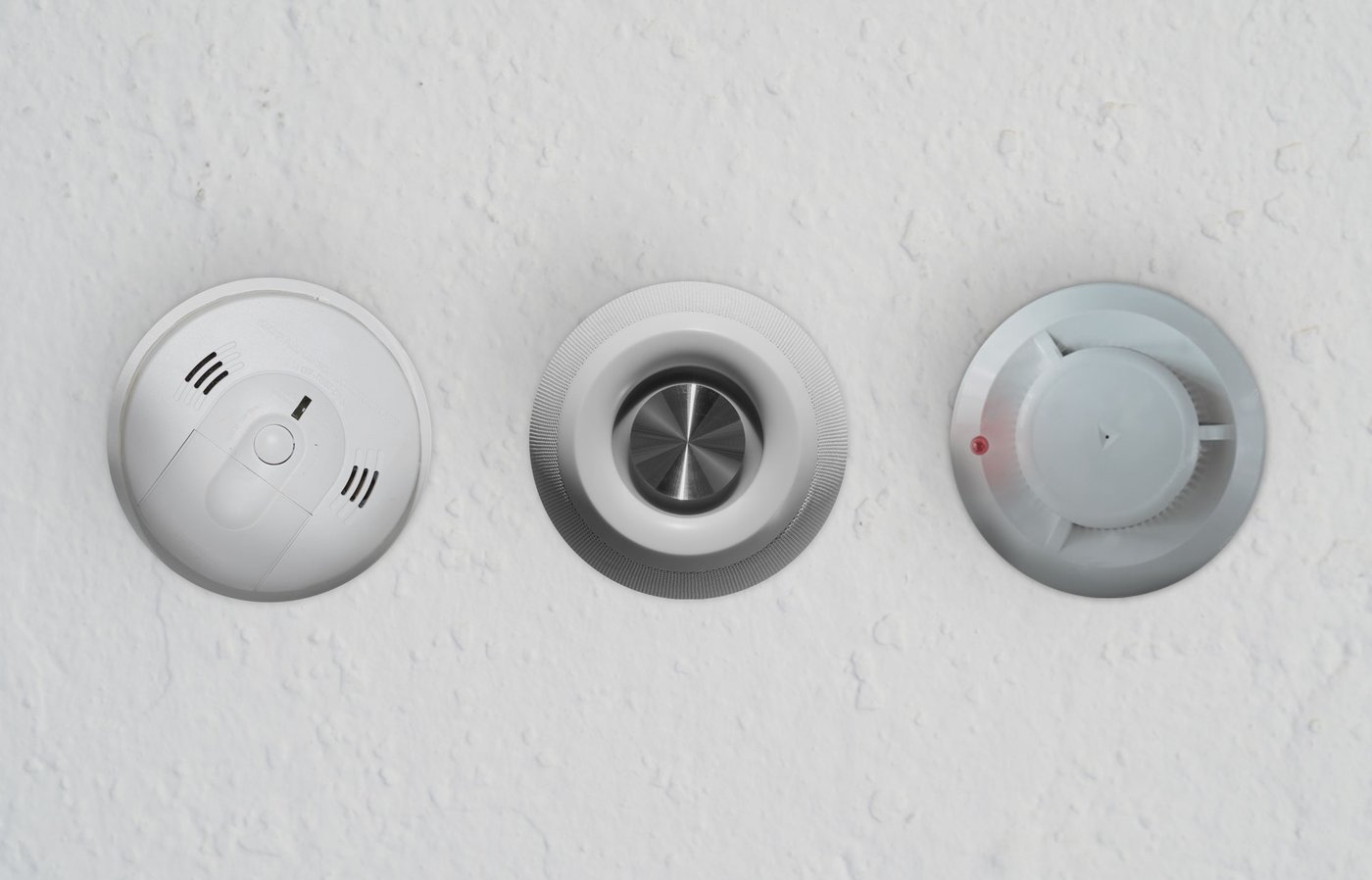
Compatible wired gas and CO detectors can be connected to the PIERRE PRO system.
The detector is connected to the appropriate input of the PIERRE Controller, allowing its alarm status to be used within the PIERRE system for status indication, notifications, and triggering automations.
The type of gas that can be detected always depends on the connected detector. The appropriate detector must be selected according to the application and the type of gas to be monitored.
The detector continuously performs its own measurements and provides an alarm signal to the PIERRE system according to its operating principle and configured or factory-defined alarm threshold.
The PIERRE Controller does not measure the gas concentration itself; it receives and processes the digital alarm status provided by the connected detector.
Applications
Wired integration can be used in:
-
houses and apartments,
-
larger residential properties,
-
commercial and other buildings,
-
projects where wired detector infrastructure is already available or can be planned and installed in advance,
-
systems where the alarm status of a gas or CO detector should be used for additional PIERRE automations.
Automations
The alarm status of a gas or CO detector can be used as a condition in Automations.
In the event of an alarm, the PIERRE system can, for example:
-
send notifications to users,
-
activate a compatible external audible or visual alarm,
-
control an appropriate gas shut-off device,
-
activate a compatible ventilation system,
-
trigger additional preconfigured automations.
Automatic gas shut-off or ventilation may only be implemented if the control method of the connected equipment, the technical design of the complete system, the manufacturer's requirements, and applicable regulations allow it.
Installation Requirements
The installation position and mounting height of the detector must always be determined according to the detector manufacturer's instructions and the properties of the gas to be detected.
In general:
-
methane / natural gas is lighter than air and is therefore typically detected using detectors installed in the upper part of the room,
-
LPG is heavier than air and is therefore typically detected using detectors installed in the lower part of the room,
-
the installation position of a CO detector must not be determined using the same positioning rules as methane or LPG detectors; it must always be installed according to the detector manufacturer's instructions and applicable requirements.
The detector should not be installed in a location where windows, extractor fans, ventilation equipment, or direct airflow could significantly affect detection, unless otherwise specified by the detector manufacturer.
Technical Notes
-
A compatible relay contact alarm signal can be connected to the PIERRE Controller input.
-
If the detector is powered directly from the PIERRE system power supply, a 12 V DC detector with a suitable relay contact output must be used.
-
A 230 V AC detector can also be integrated, provided that its alarm status is connected to the PIERRE Controller input through a suitable potential-free (dry contact) relay contact. 230 V must never be connected directly to a PIERRE Controller digital input.
-
The detector's supply voltage, relay output configuration, and wiring requirements must always be verified before connection.
-
Detector service life and required replacement intervals may vary depending on the type and manufacturer. The manufacturer's specified maintenance, testing, and replacement intervals must always be followed.
-
The installation date and the next required maintenance or replacement date must be documented according to the manufacturer's instructions.
-
Any work involving gas pipes, gas appliances, or the gas supply must only be carried out by a qualified professional authorized to perform such work.
-
When integrating a gas shut-off valve, a suitable and approved device for the specific application and an appropriate control method must be used.
-
Installation must always be carried out according to the detector and connected equipment manufacturers' documentation, the PIERRE technical documentation, and applicable regulations.
Important Safety Notice
The PIERRE system is a building automation and smart home control system, not a certified gas detection, CO alarm, or life-safety system.
The PIERRE system can process the status of compatible detectors, trigger events and automations, and send notifications. However, it does not replace any certified gas or CO detection and alarm system required by applicable regulations, standards, insurance requirements, or project specifications.
Notifications and automated actions provided by the PIERRE system may depend on factors including power supply, system configuration, operation of connected devices, and the network or internet connection required for the relevant function.
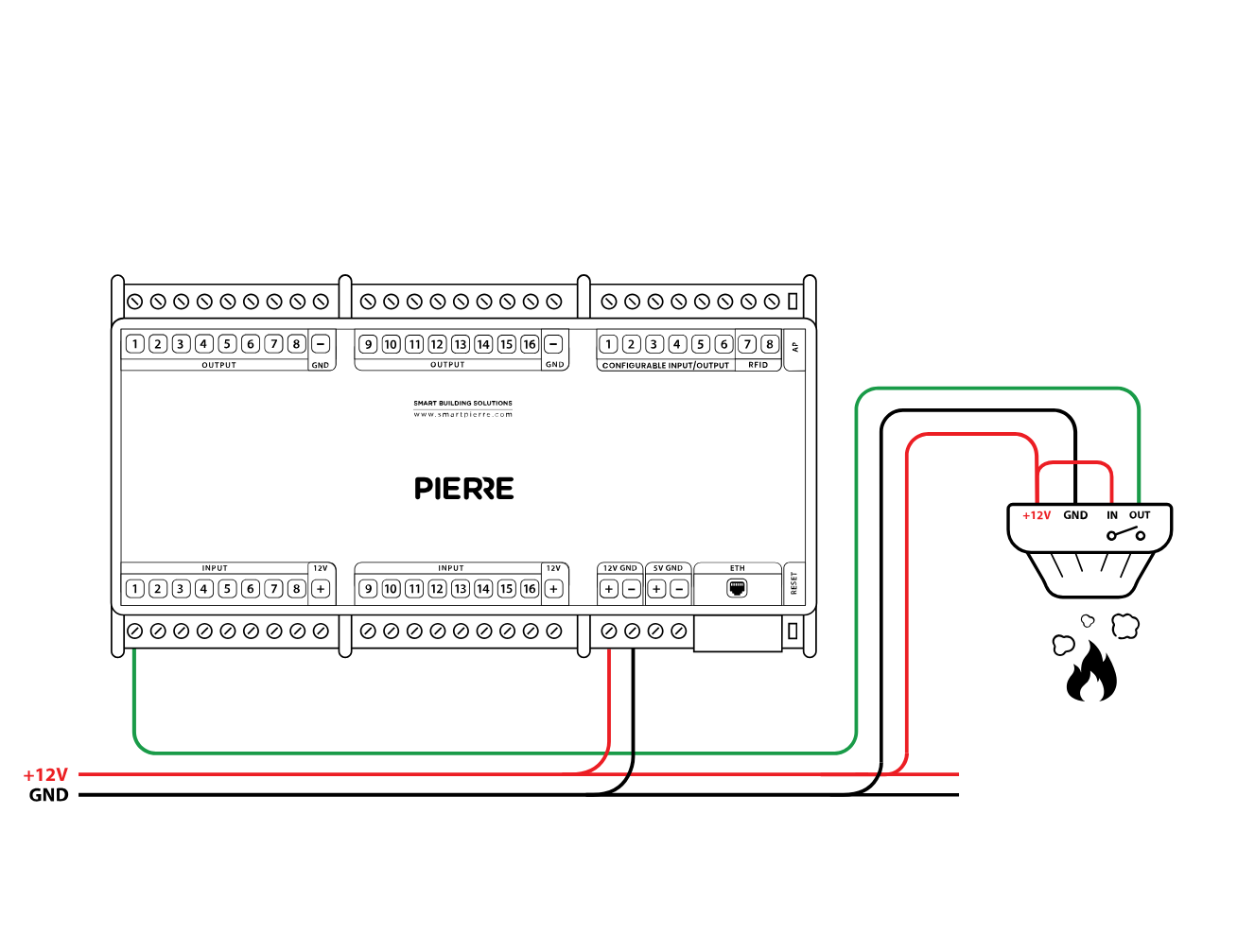
Electrical Scheme for Different Types of Gas Sensors
Cables
| Position | Wires | Diameter | Type | Comment |
|---|---|---|---|---|
| From PIERRE to Compatible CO2/Gas sensor | 3 | 0.258 mm² | UTP Cat5 | 4 twisted pairs, in total 8 thin individual wires |
Troubleshooting
Each sensor (motion, light, contact, etc.) is wired individually to the PIERRE distribution cabinet in a star topology. • INPUT 12–24 V – 12 V DC from the PIERRE controller • GND – GND from the PIERRE controller • Switch K1 – to INPUT 12–24 V • Switch K2 – to a digital input of the PIERRE controller